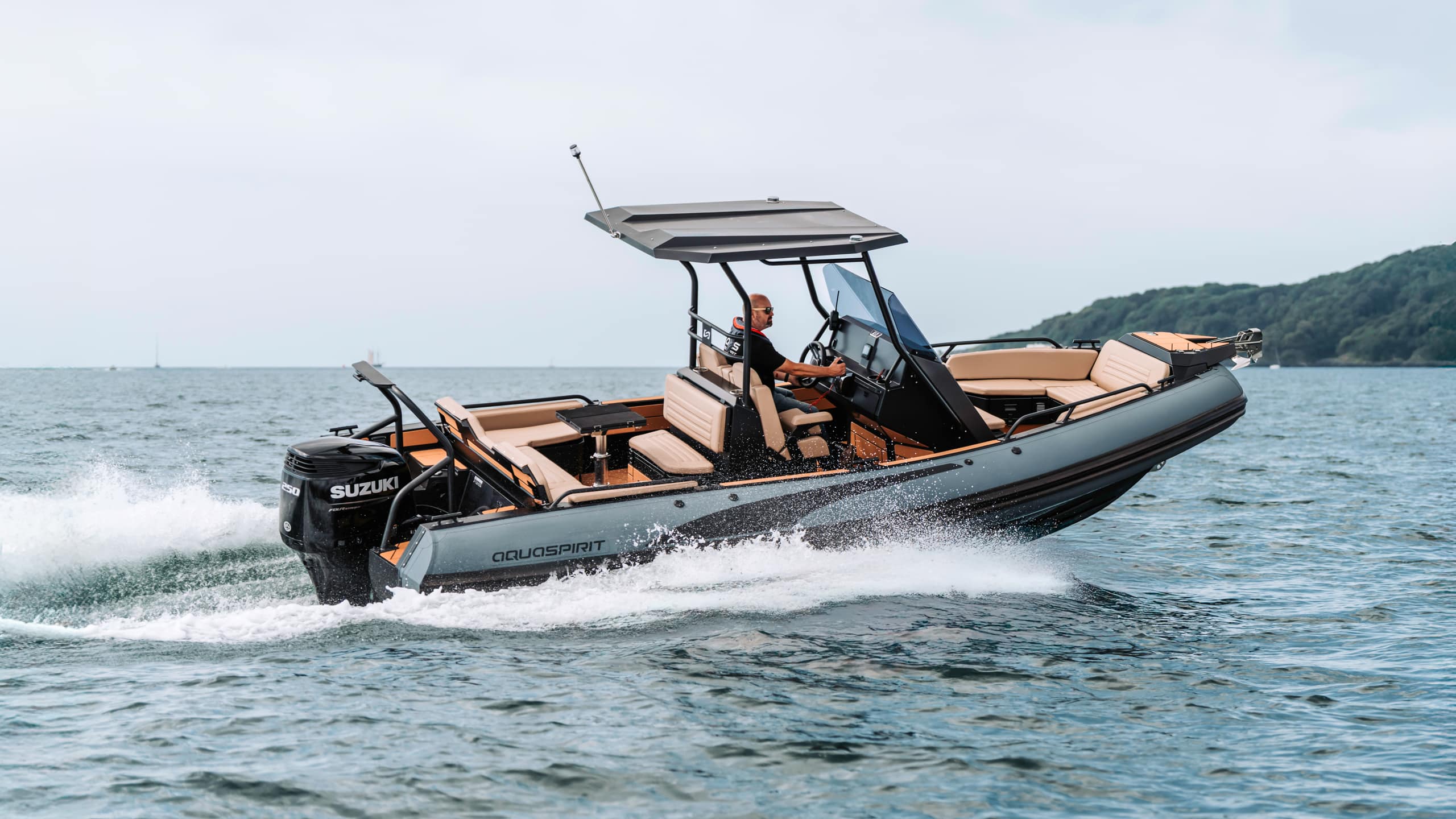
Most people select an engine based on horsepower and that's it. While horsepower is important, a RIB with the correct horsepower on the wrong shaft length will not ride well and a heavy engine on a light hull will throw it out of balance. Examine each of these points, one by one, and the options get limited.
Start with the number on the plate
All RIBs have a builder's plate that indicates the maximum engine power. This is not just a legal limit, but also an engineering one: if you exceed it, you could be in trouble with your insurance and the CE compliance of your boat. Don't set it as a goal, set it as a ceiling.
When below the ceiling, consider the amount of load on the boat. With a single person and a fishing bag, a RIB can easily get on the plane with moderate power. Six adults in the same boat require a lot more to get onto the plane and remain there. For frequent outings with a full boat, select an engine near the maximum. A boat that is not planing cleanly will use more fuel than a boat that is planing.
| Model | Length | Max power | Shaft length | Fuel tank |
|---|---|---|---|---|
| S450 | 4.42 m | 75 hp | L, 20" | 43 L |
| S585 | 5.85 m | 150 hp | XL, 25" | 132 L |
| S700 | 7.00 m | 300 hp | XL, 25" | 300 L |
Shaft length has to match the transom
Outboards come with short (15"), long (20") and extra-long (25") shafts. With the correct one, the anti-ventilation plate is approximately the same height as the base of the hull. A shaft that's too short will suck air into the propeller and cause loss of grip, particularly in turns. If it's too long, the leg will be dragging through the water and will throw spray. The length of the shaft is given by the builder. Request exactly that.
Weight at the stern changes how the boat sits
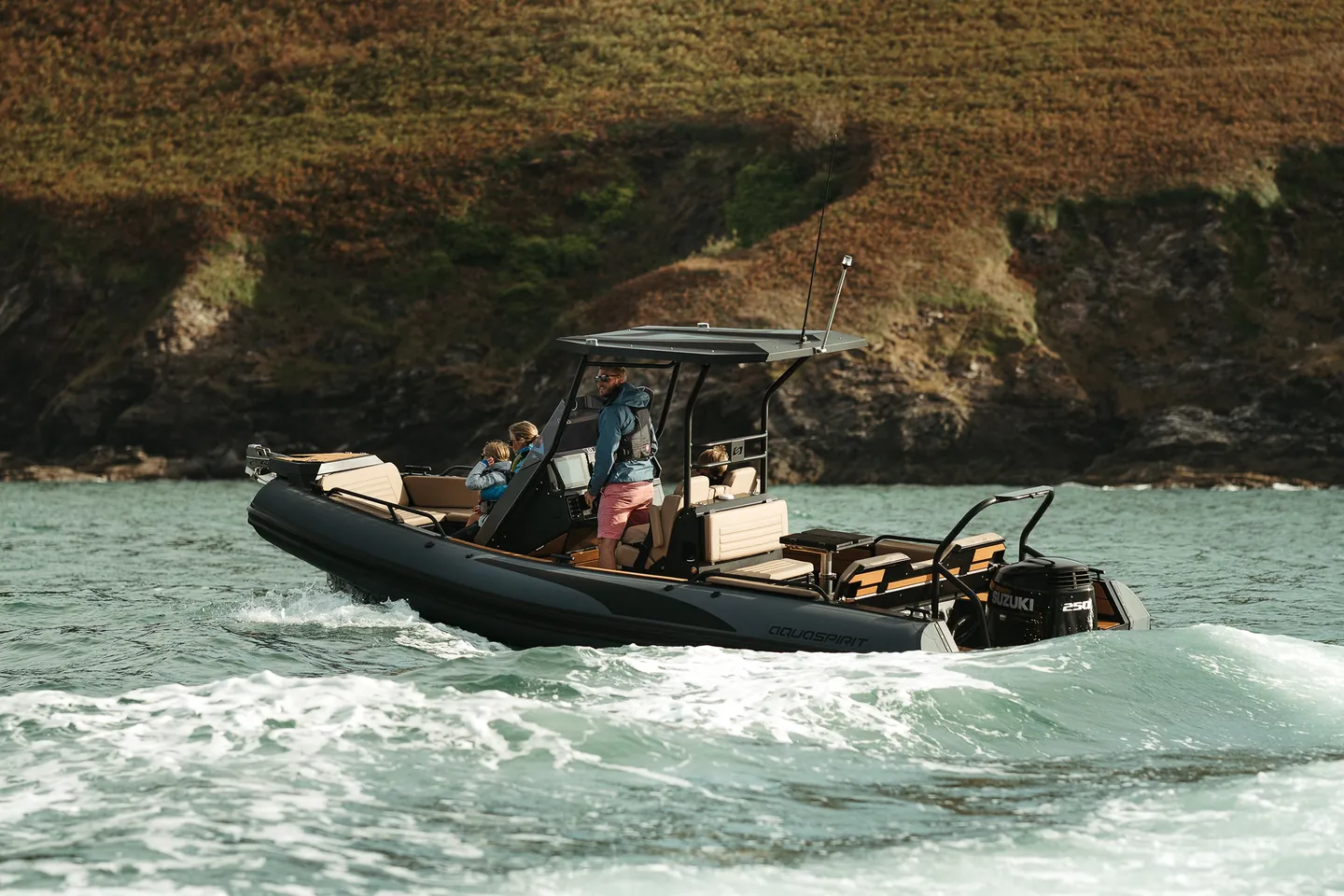
Most RIBs have the heaviest single component on the transom, the engine. A heavier engine will sink the stern and lift the bow. This impacts on the way the boat climbs onto the plane, its performance in chop and how it sits at rest. Two engines of the same horsepower may have a wide difference in weight, so check the dry weight listed on the spec sheet, not only the horsepower.
This is most important on small boats. On the S450 the engine is a big part of the overall package.
Four-stroke, two-stroke or electric
Four-stroke engines are now the norm on new leisure boats, and are almost the only option in Europe. They are less noisy, less fuel consuming and do not require oil to be added to the petrol. The compromise is weight.
Two-stroke engines are still found outside Europe on small tenders and workboats, as they're lighter for the power. The majority of them have been removed from the European market due to emission rules.
Electric outboards are silent, smell of nothing and need little maintenance. The limit is range: a battery stores a lot less energy than a fuel tank. They are most suitable for small hulls and short journeys. This is where a light hull is a big plus. The S450 gets on the plane with a 6 kW electric motor or a 15 hp petrol motor, meaning that in many areas it can be operated without a licence.
Steering and controls
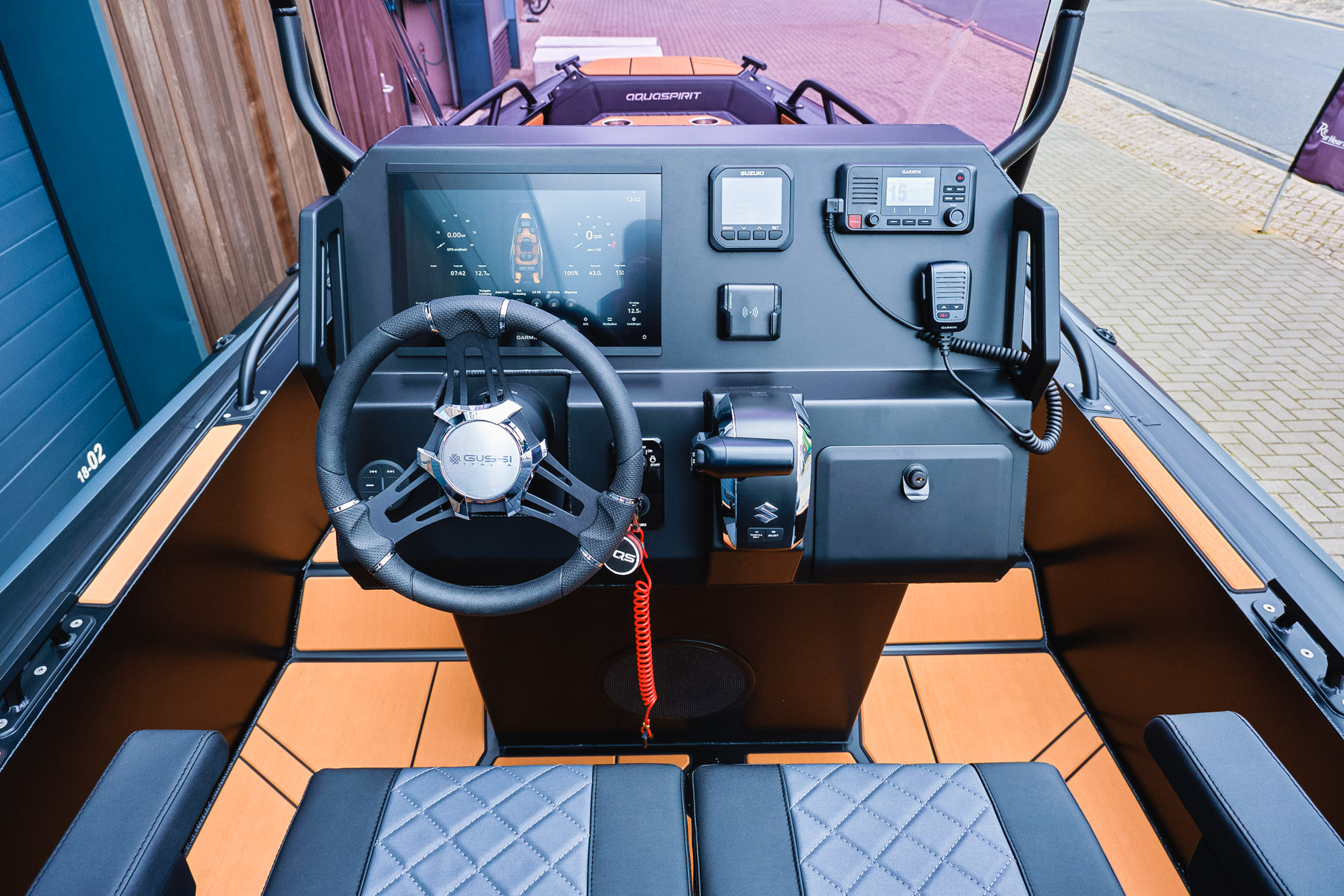
Tiller steering is for small boats and small engines. With a console, you steer remotely, either by cable or hydraulically. For moderate power, mechanical steering is simple and fine. With hydraulic steering, the torque is removed from the wheel and a large engine is much easier to keep at speed. If you intend to be close to the 150 hp limit, then it is the option we suggest on the S585.
The propeller does the rest
The same engine can feel quite different when equipped with a different propeller. With your normal load, the engine should reach the top of its recommended rev range at full throttle. Revs too low means the pitch is too high, so the engine labours. If the revs are too high, the pitch is too low and you will lose top speed and waste fuel. Aluminium propellers are less expensive and bend when you hit something. Stainless steel ones are more capable of holding their shape when loaded and are better for more powerful engines.
One engine or two
One engine is lighter, simpler and cheaper for leisure use. Professional crews have other ideas. In a rescue, if the engine fails, there must be another way home. This is why the S700 PRO designed for DLRG is twin-engined. The reinforced transom on the leisure S700 can be ordered for a small backup engine so that you can get home without the expense of a full twin installation.
Pick the brand you can get serviced
We work with all four manufacturers of excellent outboards: Suzuki, Honda, Yamaha and Mercury. The best one is typically the brand that has a service dealer close to the water you use. If an engine is difficult to service, it is left in a workshop during the season.
Mostly light loads and short trips: a lighter four-stroke well below the maximum, or electric on a small hull.
Family days and full boats: power close to the plate maximum, so the boat planes easily when it is loaded.
Big power or professional use: hydraulic steering, a stainless propeller, and a second engine or a backup option.
Not sure which hull you need yet? Start with what size inflatable boat to buy, then come back to the engine.