All folding inflatables were based on the same concept: a rowing dinghy or an army raft which had to be packed into a bag. Over the decades of development, there have been transoms added to the outboard, plywood floorboards and V-shaped bottoms and today's foldables serve far beyond just the boats that brought them to fruition. One thing hasn't changed: the bottom is still soft.
Such softness is a good attribute where it should be. If you do land on a rock or mud, run a foldable onto it, and the hull takes the impact rather than the corners, so there's not much actual damage done if you land on a rock. It's also the reason the entire boat goes into a bag at the end of the journey. That give in the floor is also the ceiling as to what the boat can do once off shore.
The real change a rigid hull brings
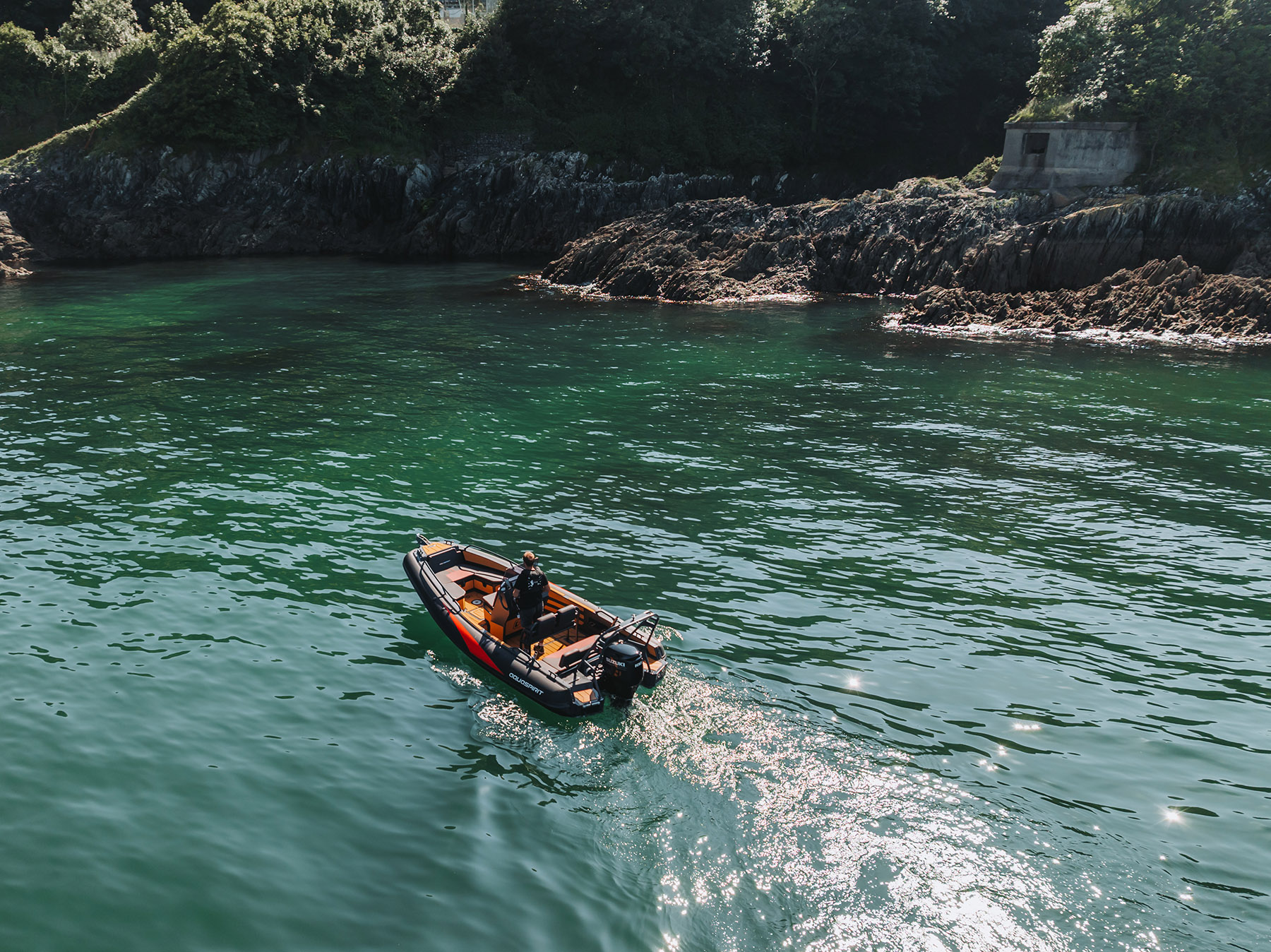
A rigid inflatable boat (RIB) retains the same inflatable collar used for buoyancy and impact protection, but instead of the soft floor, has a real hull, which is typically made of aluminium or fibreglass. It's between a folding inflatable and a regular boat - it tries to retain the benefits of an inflatable, while eliminating some of the drawbacks.
If it's a soft bottom that's going to cost you speed
A foldable is NEVER going to be the fastest on the water, because a soft hull pushes more water out the way than a hard hull does. The other limiting factor is shape: tension can only be applied to fabric and air chambers to a certain degree. Even a V shaped floor that folds is pretty simple. A rigid hull can be shaped to ride most hydrodynamically in a chop, and will stay that shape forever, which is where the true hydrodynamically beneficial properties reside.
Comfort: and the meaning of "ready to go"
Foldables are designed to be used in a sporty, no frills manner, and they are designed that way for a reason. The space on a RIB allows for the fit-out with comfortable seating and fittings that make a long day on the water easy rather than just tolerable. The other distinction is evident when the boat gets out of the trailer: a foldable will need to be erected and configured each time the boat goes out, whereas the RIB's hull is pre-assembled. If the tubes have been deflated, inflate them and it's ready to go!
Foldable and RIB, side by side
| Feature | Foldable | RIB |
|---|---|---|
| Seaworthiness | Good | Excellent |
| Top speed | Medium | Higher |
| Comfort | Medium | Much higher |
| Standard features | Basics mainly | Wide range |
| Getting on the water | Full rig, every time | Ready to launch |
| Structural strength | Medium | Much stronger |
| Storage space | Packs down small | Needs much more |
| Boat weight | Light | Heavier |
| Price | Medium | Higher |
So which one should you buy?
Foldable: the right call when boot space, portability or an occasional, easygoing outing matter more than outright performance.
RIB: the right call once ride, speed and comfort matter as much as simply getting the boat out, and you have somewhere to keep a hull that won't fold away.
The trade-off is real: a RIB costs more, weighs more and needs somewhere to store a hull that won't collapse into a bag. For most owners who move past occasional, low-key use, that trade pays for itself once the hull is in the water. Once a RIB is the direction, the next two decisions are the hull material (see aluminium vs fibreglass) and the tube fabric (see Hypalon vs PVC).